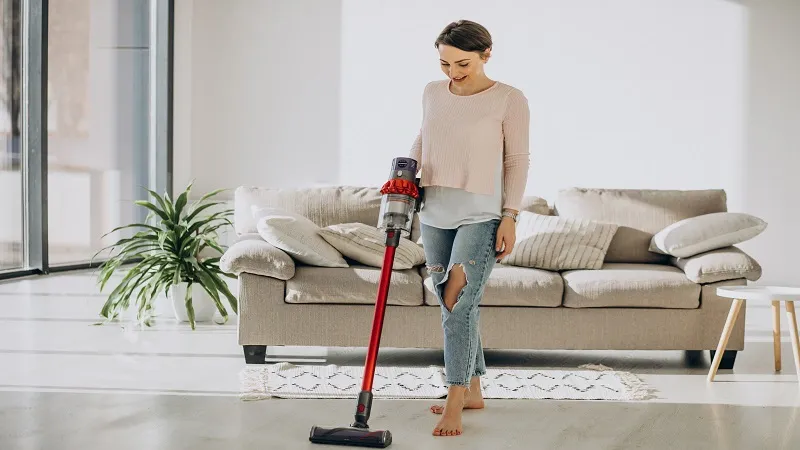
Purchasing a vacuum cleaner is easy until you find yourself in front of a wall of vacuums with no clear way to compare them.
Power suction, filtration ratings, lengths of hoses, types of filters, when all the products boast that they are the best, and you can’t easily figure out what you really want in your particular application.
This wastes your time and the quality of your completed work.
The wrong vacuum performs poorly and deteriorates further with the filter becoming clogged and the suction decreasing.
Getting it right at the outset will save you all that.
This article summarizes the top six features to consider when purchasing a vacuum cleaner, to ensure your money is well spent.
1. Filtration Quality — The Feature That Matters Most
When evaluating any vacuum, filtration quality should be your top priority. It determines not only what the machine captures, but also what it releases back into the air.
HEPA-certified filtration remains the gold standard. A true HEPA filter captures a large percentage of airborne particles, including the fine dust that standard filters often miss. This distinction becomes especially important in environments where fine particulates are generated regularly—such as sanding wood, painting, or applying coatings.
A vacuum that simply transfers dust from the floor into a collection bag, only to release fine particles through its exhaust, does not solve the problem—it redistributes it.
Beyond protecting the person operating the vacuum, proper filtration also safeguards the surrounding workspace and anyone within it.
For that reason, always verify that a vacuum is genuinely HEPA-certified. Labels like “HEPA-style” or “HEPA-like” may sound reassuring, but they have no standardized meaning and can be misleading.
2. Self-Cleaning Filter Technology — Consistent Suction Throughout the Job
The vacuum may be of very good filtration, and even fail when the filter gets clogged in the middle of the project.
Suction decreases with dust accumulation in the filter as it is operated.
In case of a decrease in the suction, dust flies off the surface and into the air, thus, removing the point of using an extractor in the first place.
This issue is directly addressed with the self-cleaning filter technology.
Vacuums with a built-in filter cleaning system pulse and shake the filter at regular intervals while cleaning, to dislodge the dust that has built up on the filter and ensure that it remains at an even suction level throughout.
This feature is essential to professionals holding long sanding sessions.
Constant suction equals constant dust capture, which equals a cleaner surface, improved air quality, and a more predictable finish in the entire job.
3. Static-Safe Hoses — A Detail Most Buyers Overlook
Besides, static electricity buildup in vacuum hoses is a problem that rarely gets discussed in product comparisons, but it has a direct impact on performance.
As fine dust particles move through a typical hose at speed, friction produces a static charge.
Such a static charge may cause dust to stick to the inside of the hose instead of passing through to the collection chamber.
With time, such accumulation limits the airflow, efficiency of suction, and may even cause discharge that can disrupt sensitive machinery or pose a fire risk during work involving flammable materials.
The hose must be designed to be static-safe or static-conductive, and should dissipate the charge as it accumulates to maintain the airflow clean and steady.
4. Hose Length and Reach — Practical Flexibility for Real Workspaces
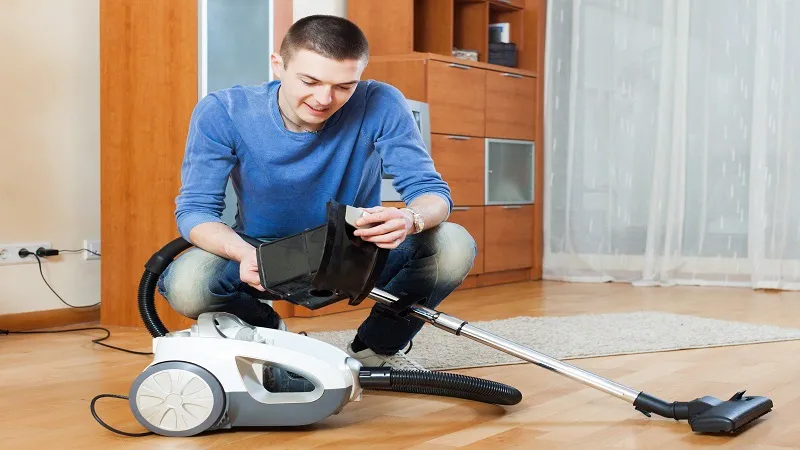
A vacuum that cannot reach your work area without being constantly repositioned adds friction to every task.
Hose length directly influences how efficiently you can perform your job, and it is a specification that is frequently underestimated by purchasers.
A hose 12 to 13 feet long will provide a useful length without dragging the unit across the floor every few minutes.
In larger working areas, or a multi-operator setting, the capacity to stretch that distance – with compatible extension hoses – is even more useful.
Certain more professional-level vacuums permit extensions, enabling them to be used up to 23 feet away from the unit.
Such a reach also implies that the extractor can be placed completely out of the way, minimizing clutter and allowing you to move around the workpiece without disturbance.
5. Tool-Triggered Auto-Start — Effortless Integration With Your Sander
Tool-triggered auto-start is considered one of the best features in a professional dust extractor.
It is an auto-on, auto-off vacuum that activates as soon as your sander is turned on and deactivates when it is turned off, without any manual activation or deactivation.
The advantage is simple, dust capture starts with the first stroke of the sanding and not when you remember that you should turn on the extractor.
It is more than it appears at first. Multiple passes on a surface create a lot of dust, and unless the vacuum is on at the beginning, the dust is already in the air prior to the extraction process.
In addition to the apparent benefit of dust capture, auto-start also minimizes wear of the vacuum and the sander, as they run together.
6. Capacity and Multi-Operator Support
Lastly, the size of a vacuum, of both the collection volume and operational range, must be large enough to suit your work.
Unit filling up fast on a big job requires stopping to empty it multiple times, disrupting the workflow and increasing time per project.
In personal applications, an 8-gallon collection capacity is a good compromise between mobility and realistic run time.
In greater volume settings, especially when two operators are working at the same time, you must have a unit that is designed to handle such a load.
A Dual-Operator Professionally designed industrial vacuum for the use of two sanders can operate two air-powered, electric, or a combination of both sanders at the same time, all on a regular 15-amp circuit.
That power efficiency means you are not rewiring your workspace or adding dedicated circuits just to run your dust extraction system.
Final Thoughts
The correct vacuum cleaner is not the one that most impressively markets itself, but rather that one that has the right specifications to meet the actual requirements of your work.
Emphasize true HEPA filtration, self-cleaning filter technology, non-electric hoses, proper reach, in-built auto-start, and the ability to work your load without failure.
Each of these characteristics directly affects air quality, finish, abrasive life, and job efficiency.
Check them first, and you will have a vacuum which will find its way into your system daily.