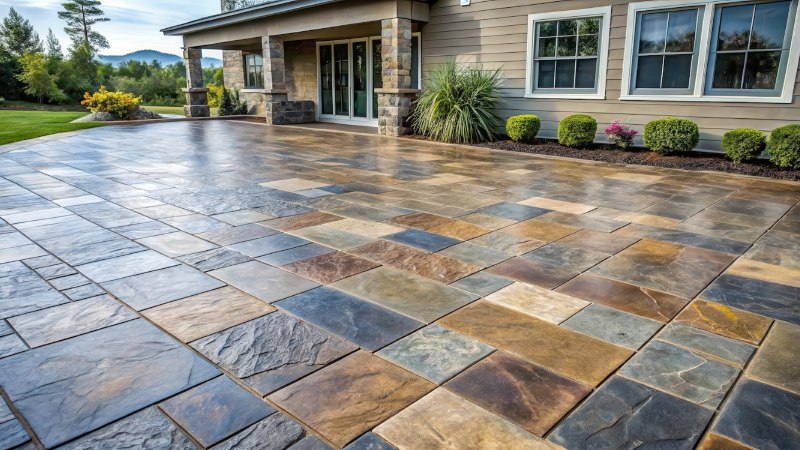
Choosing the right color can make a major difference in how your outdoor or indoor concrete surfaces look and feel. Whether you are updating a driveway, patio, pool deck, walkway, or interior floor, decorative concrete gives homeowners a wide range of colors and finishes that can complement almost any architectural style.
However, selecting a color involves more than simply choosing your favorite shade. Climate, surrounding materials, maintenance, lighting, and the overall style of your property should all influence your decision. A carefully selected concrete color can help create a more cohesive home design while giving ordinary concrete a polished, customized appearance.
Consider Your Home’s Existing Color Palette
Before selecting a decorative concrete color, look closely at the colors already used around your property. Your roof, exterior walls, trim, doors, landscaping, pavers, and outdoor furniture can all provide direction.
The goal does not necessarily have to be an exact color match. In many cases, choosing a complementary shade creates a more balanced appearance.
For example, a home with beige or cream exterior walls may pair well with warm tan, sandstone, or light brown concrete. Gray, white, and contemporary homes often work well with charcoal, slate, or cool gray surfaces.
If your home contains several strong colors already, consider keeping the decorative concrete relatively neutral. This prevents the overall design from becoming visually overwhelming.
Think About Where the Decorative Concrete Will Be Installed
Different areas of your property may benefit from different colors.
Driveways and Walkways
Driveways cover a large portion of the property, so extremely bold colors can easily dominate the exterior design. Neutral shades such as gray, taupe, beige, and natural stone colors are often practical choices.
Medium shades can also help disguise everyday dust, tire marks, and minor stains more effectively than very light or extremely dark surfaces.
Patios and Outdoor Living Areas
Patios provide more freedom for creativity. Warm earth tones can create a comfortable and welcoming atmosphere, while gray tones can complement modern outdoor kitchens, contemporary furniture, and minimalist landscaping.
Stamped decorative concrete can also combine multiple shades to recreate the natural variation found in stone, slate, brick, or wood.
Pool Decks
Color selection becomes particularly important around swimming pools. Because concrete surfaces receive direct sunlight for several hours during the day, darker finishes may absorb more solar heat than lighter finishes.
For this reason, homeowners in warm climates often consider lighter shades such as sand, cream, light gray, or beige for pool decks. These colors can also create the bright, resort-inspired appearance many homeowners want around their pools.
Consider Sunlight and Heat
A decorative concrete sample can look noticeably different depending on lighting conditions.
A shade viewed inside a showroom under artificial lighting may appear lighter, darker, warmer, or cooler once installed outdoors. Direct afternoon sunlight can also make some colors appear more intense.
Ask your contractor whether you can view physical samples outside before making your final decision. If possible, examine them during the morning, afternoon, and evening.
This becomes especially important in sunny climates where surfaces may receive six, eight, or even ten hours of direct or partially direct sunlight during certain times of the year.
Choose Between Warm and Cool Concrete Colors
One simple way to narrow your options is to determine whether your home looks better with warm or cool tones.
Warm decorative concrete colors include:
- Beige
- Tan
- Terracotta
- Sandstone
- Brown
- Copper-inspired tones
These shades tend to complement Mediterranean, Spanish, rustic, traditional, and tropical-style homes.
Cool colors include:
- Light gray
- Slate
- Charcoal
- Blue-gray
- Graphite
These options often work particularly well with contemporary and modern architecture.
Neutral shades can bridge both categories and are useful when homeowners want something timeless rather than following a temporary design trend.
Coordinate Decorative Concrete With Landscaping
Landscaping should also influence your color choice.
Properties surrounded by lush greenery may look attractive with warm stone-inspired concrete because the earthy tones provide contrast against green plants. Homes with rock gardens, minimalist landscaping, or modern geometric designs may benefit from cooler gray finishes.
Consider how your landscaping may change over the next five to ten years as well. Trees grow, gardens expand, and outdoor furniture gets replaced. Selecting a versatile decorative concrete color makes it easier for the surface to continue coordinating with future updates.
Understand How Concrete Finishes Affect Color
Color is only one part of the final appearance. Texture and finishing methods can dramatically influence how that color looks.
Stamped concrete can contain multiple tones to create realistic stone or brick effects. Stained concrete may produce natural variations rather than one completely uniform shade. Polished surfaces can reflect more light, making colors appear different from matte finishes.
A protective sealer may also deepen certain shades and create anything from a subtle satin finish to a noticeable gloss.
Before installation, ask to see a sample that combines both your preferred color and intended finish.
Avoid Choosing a Color From a Small Sample Alone
One of the easiest mistakes homeowners can make is choosing from a tiny color chip.
A two-inch sample represents only a small portion of a surface that may eventually cover hundreds or even thousands of square feet. Once installed across an entire driveway or patio, the color can have a much stronger visual impact.
Whenever possible, request a larger sample or look at completed decorative concrete projects using similar colors.
Photos can provide inspiration, but physical examples are generally more helpful because camera settings, screens, shadows, and editing can change how colors appear.
Think About Long-Term Maintenance
Your preferred color should also fit your maintenance expectations.
Extremely light surfaces may make certain dirt or organic stains easier to notice, while very dark surfaces may highlight dust or mineral residue. Medium neutral colors often provide a practical balance between appearance and everyday maintenance.
Your contractor may also recommend periodic cleaning and resealing depending on the decorative concrete system, location, traffic level, and exposure to weather.
Make Your Final Decorative Concrete Color Decision
The best decorative concrete color is one that complements your home’s architecture, performs well in its environment, and continues looking attractive as design trends change.
Start with your home’s existing exterior colors, then consider sunlight, heat, landscaping, surface location, texture, and maintenance. Instead of making your decision from a small digital image, compare physical samples under the actual lighting conditions where the concrete will be installed.
With the right combination of color and finish, decorative concrete can transform an ordinary driveway, patio, walkway, pool deck, or floor into a design feature that feels intentionally connected to the rest of your home.